
South Africa’s Hidden Crisis.
Are we preparing our Children for Life?
Emotional Intelligence:
The Missing Skill Our Children Need Most
But many still struggle with skills that are essential for life:
How do I manage my emotions when I feel overwhelmed?
How do I resolve conflict without hurting someone?
How do I make wise decisions under pressure?
How do I understand myself and communicate my needs?
These are not simply “soft skills”. These are life skills.
This is not a criticism of teachers or learners. Teachers carry an enormous responsibility, often with limited time and many demands. But somewhere along the way, important conversations about emotions, resilience, relationships, and self-awareness are often pushed aside.
After more than 40 years in education, I have seen that children need more than academic knowledge. They need to understand themselves, build confidence, learn empathy, and discover the strengths they already carry within them.
In 2024, I worked alongside my husband, Tinie, to present an ATKV-accredited Life Skills programme to over 1 500 primary school learners.
The programme was built around four important pillars:
Learn to Know
Understanding yourself, your emotions, and what matters.
Learn to Be
Building confidence, resilience, and the courage to be yourself.
Learn to Do
Making responsible choices, solving problems, and learning through experience.
Learn to Live Together
Listening, showing empathy, and understanding that we are stronger together.
Life has a way of reminding us that these skills are not just lessons in a classroom, they are skills we need every day.
When Tinie faced serious health challenges, the very principles we had shared with children became powerful reminders of resilience, perseverance, mindfulness, and faith.
This inspired the creation of: Survive. Discover. Grow. — The Island Adventure
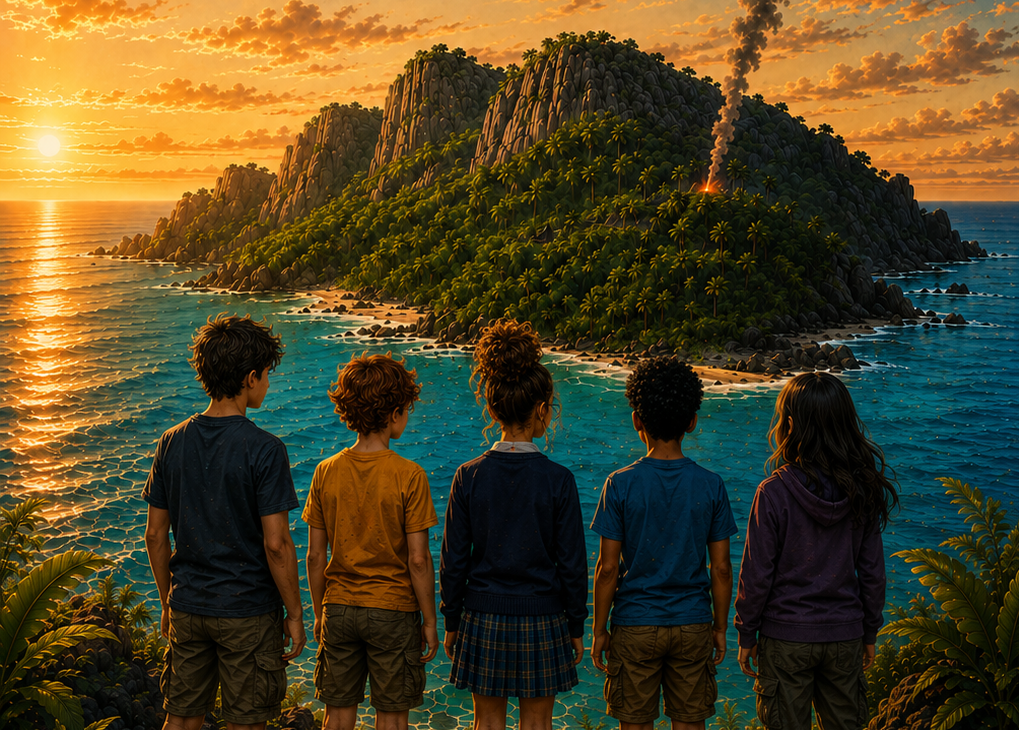
Through the story of five friends stranded on a remote island, children discover important lessons about emotions, teamwork, decision-making, communication, courage, and personal growth.
The island becomes a place where they learn that every emotion has a message, every person has a role to play, and every challenge can reveal hidden strengths.
My hope is that this book will help children start conversations that matter, conversations about who they are, how they feel, and how they can face life’s challenges with greater understanding and confidence.
Because education is not only about preparing children for exams,
It is about preparing them for life.
Yet despite all this progress, I have become increasingly concerned about something important. Many children know more than ever before, but struggle with the skills that matter most in everyday life.
They struggle to manage disappointment. They struggle to work through conflict. They struggle to understand their emotions. They struggle to persevere when things become difficult.
In short, they struggle with Emotional Intelligence.
Emotional Intelligence is not about being emotional. It is about understanding ourselves, understanding others, and responding wisely to the challenges life presents.
Research consistently shows that emotional intelligence plays a significant role in personal success, healthy relationships, resilience, leadership, and overall well-being.
The question is: How do we teach it?
The answer is not another worksheet. It is not another test. It is not another list of facts to memorise.
Children learn emotional intelligence through experience.
They learn it when they face challenges, solve problems, work together, make mistakes, and reflect on the consequences of their choices.
This belief inspired the creation of Survive. Discover. Grow. – The Island Adventure.
The story follows five young friends who unexpectedly find themselves stranded on a remote island. As they work together to survive, they encounter situations that require far more than knowledge.
They must learn to manage fear. They must make decisions under pressure. They must resolve disagreements. They must understand their own emotions and the emotions of others. They must learn resilience when things do not go according to plan.
Throughout the adventure, readers are gently introduced to practical emotional intelligence concepts and life skills in a way that feels natural, engaging, and memorable.
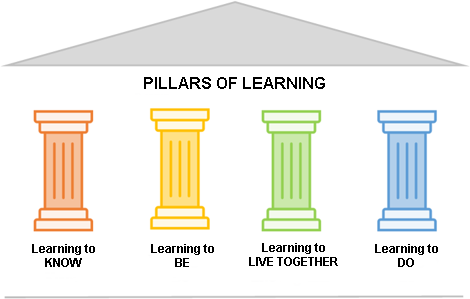
The book is built around four internationally recognised pillars of learning:
Learn to Know – developing curiosity, understanding, and critical thinking
Learn to Do – applying knowledge through action and problem-solving.
Learn to Live Together – building empathy, teamwork, communication, and respect.
Learn to Be – developing self-awareness, resilience, confidence, and emotional maturity.
These pillars help children grow into capable, balanced individuals who are prepared not only for school but for life.
As educators and parents, we all want children to succeed academically.
But perhaps an even more important question is this: Are we helping them become resilient, thoughtful, compassionate human beings?
Because one day the marks on a report card will be forgotten. The ability to understand themselves, work with others, overcome setbacks, and make wise decisions will remain with them for a lifetime.
That is the journey at the heart of Survive. Discover. Grow. – The Island Adventure. It is more than an adventure story. It is an invitation for children to develop the emotional intelligence they need to navigate an increasingly complex world with confidence, courage, and compassion.
If we truly want to prepare children for the future, we must teach more than academic knowledge. We must help them discover who they are, how to work with others, and how to grow through life's challenges.
That is where real education begins.
The Four Pillars Every Child Needs to Thrive
"How much does this child know?"
Today, I believe we should be asking a different question:
"Who is this child becoming?"
Knowledge is important. Reading, mathematics, science, and technology all have their place. But as parents and educators, we know that life demands much more than academic achievement.
Every day our children are required to make decisions, manage emotions, solve problems, work with others, and adapt to change.
These are not examination skills. They are life skills.
UNESCO identified four pillars of learning that remain just as relevant today as when they were first introduced. They provide a framework for educating the whole child rather than simply filling young minds with information.
1. Learn to Know
Children are naturally curious. They ask endless questions. Why is the sky blue? Why do birds fly? Why do people feel sad? Unfortunately, somewhere along the way, many children stop asking "why" and start asking, "Will this be in the test?"
Learning to Know is about keeping curiosity alive. It is about encouraging children to explore, investigate, question, and discover rather than simply memorise facts.
Curiosity is the engine of lifelong learning.
2. Learn to Do
Knowledge becomes meaningful only when it is applied. Children need opportunities to make decisions, solve problems, create solutions, and learn from mistakes. Confidence is not built by always getting the right answer. It is built by trying, failing, adapting, and trying again. Learning to Do develops resilience and independence—qualities that will serve children long after they leave the classroom.
3. Learn to Live Together
Perhaps no skill is more important in today's connected world. Children need to understand that every person has different thoughts, feelings, strengths, and experiences. Empathy, communication, respect, cooperation, and conflict resolution are not optional extras. They are essential life skills. When children learn to listen before judging and collaborate instead of competing, they become better classmates, better friends, and eventually better leaders.
4. Learn to Be
This may be the most important pillar of all.
Learning to Be is about discovering identity, developing self-awareness, building confidence, and understanding emotions. It is about helping children recognise that mistakes are opportunities to grow, challenges are opportunities to become stronger, and every experience contributes to the person they are becoming. A child who knows who they are is far better equipped to navigate an uncertain world.
More Than Academic Success
As a retired teacher with more than forty years of experience, I have come to believe that these four pillars are not simply educational ideals.
They are the foundation of emotional intelligence.
They help children become curious thinkers, confident problem-solvers, compassionate friends, and resilient individuals.
That is the vision behind Survive. Discover. Grow. – The Island Adventure.
Through the adventures of five young friends stranded on a remote island, children experience these four pillars in action. They learn to ask questions, solve problems, work together, and discover strengths they never knew they possessed.
Because education is not only about preparing children for the next examination.
It is about preparing them for the next challenge, the next relationship, the next disappointment, the next opportunity, and ultimately, for life itself.
Over the next four articles, I will explore each of these pillars in greater depth and share practical ways that parents, teachers, and schools can nurture emotional intelligence every day.
Because when we help children Learn to Know, Learn to Do, Learn to Live Together, and Learn to Be, we are giving them something far more valuable than good marks.
We are giving them the skills to thrive.
Emotional Intelligence for Everyday Life – A weekly series by Lynne Terblanche, retired educator and co-author of Survive. Discover. Grow. – The Island Adventure.
Learn to Know
Raising Curious Thinkers
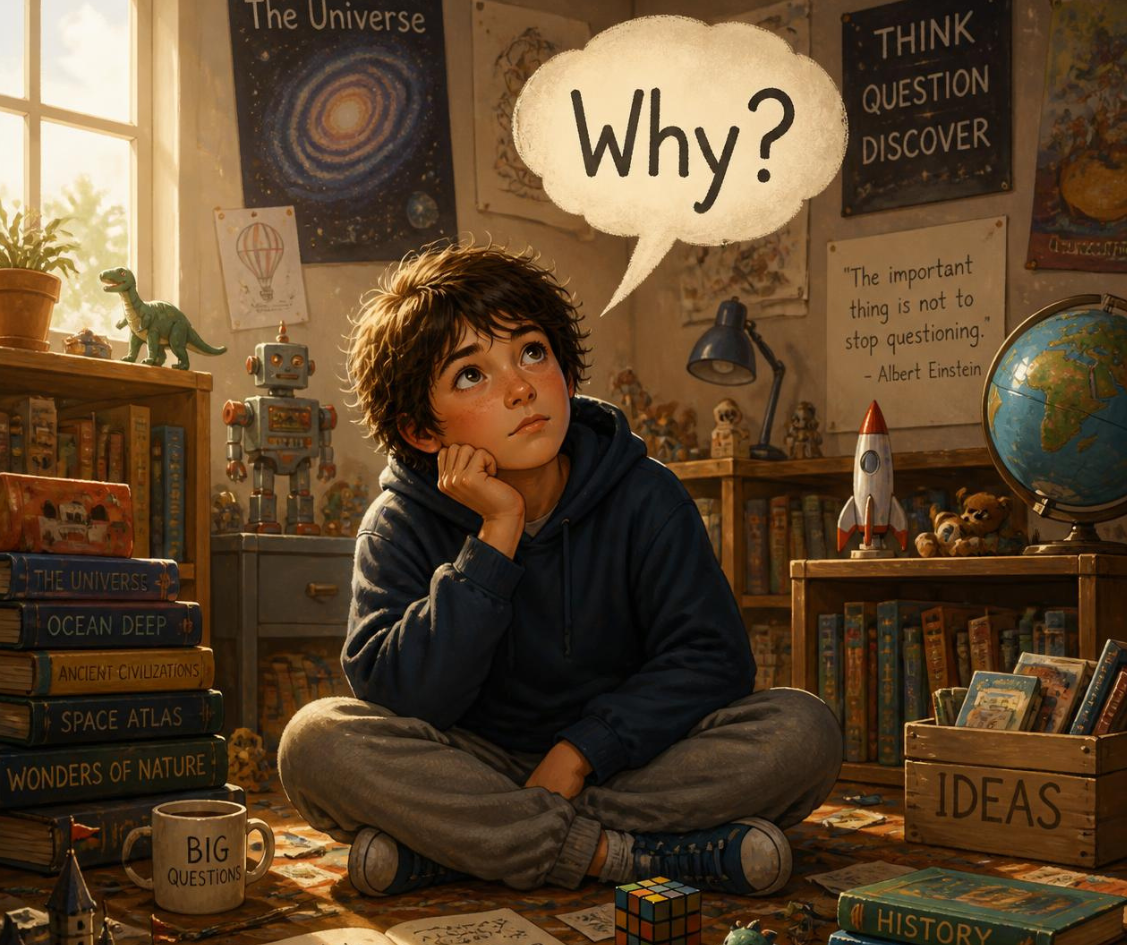
"The important thing is not to stop questioning." Albert Einstein
Have you ever noticed how young children seem to ask an endless stream of questions? "Why is the sky blue?" "Why do birds fly?" "Why do people cry?" "How do fish breathe underwater?"
To a young child, the world is one great adventure waiting to be discovered. Curiosity is natural. It is how children learn long before they ever enter a classroom. Yet somewhere along the educational journey, something often changes.
The endless "why?" questions become fewer. Instead of asking, "Why does this happen?", children begin asking, "Will this be in the test?"
As educators and parents, that should concern us.
Curiosity Is the Beginning of Learning
The first pillar of learning, Learn to Know, is far more than acquiring information.
It is about developing a love of learning.
It is about encouraging children to explore, question, investigate, and make connections between ideas.
Children who remain curious don't simply collect facts, they become thinkers. They don't wait to be told what to think. They learn how to think.
In today's world, where information is available in seconds, curiosity has become even more valuable than knowledge itself.
Facts can be searched. Curiosity cannot.
What Happens When Curiosity Disappears?
When curiosity fades, learning becomes a task instead of an adventure. Children begin to learn for marks instead of understanding. They become afraid of making mistakes because mistakes affect results. Instead of experimenting, they wait for someone to give them the correct answer.
Over time, learning becomes something they have to do rather than something they want to do. And that is a tremendous loss.
Because curiosity fuels creativity.
It drives innovation.
It develops problem-solving.
It encourages resilience.
It prepares children for a future where many of today's jobs do not yet exist and tomorrow's challenges cannot be solved with yesterday's answers.
How Can We Keep Curiosity Alive?
The good news is that curiosity can be nurtured every day. Parents and teachers do not need expensive resources. They simply need to create opportunities for children to wonder.
Ask open-ended questions. Encourage children to explain their thinking. Celebrate effort as much as correct answers. Allow time for exploration and discovery.
Most importantly, don't rush to provide every answer. Sometimes the greatest gift we can give a child is the opportunity to keep wondering. That is where deep learning begins.
Stories That Inspire Thinking
Stories have a unique way of awakening curiosity. Unlike worksheets or tests, a story invites children to imagine, predict, question, and discover.
Readers naturally begin asking: "What would I do?" "Why did that happen?" "Could there have been another solution?" Those questions are the beginning of critical thinking.
That is one of the reasons my husband, Tinie, and I wrote Survive. Discover. Grow. – The Island Adventure.
The story follows five young friends who unexpectedly find themselves stranded on a remote island. There are no adults with ready-made answers. No instruction manual. No quick solutions. The children must observe, ask questions, solve problems, and make thoughtful decisions together.
As readers journey with the characters, they are encouraged to think alongside them rather than simply read about their experiences. Curiosity becomes part of the adventure.
Raising Lifelong Learners
The greatest gift we can give a child is not all the answers. It is the confidence to keep asking meaningful questions.
Children who remain curious become adults who continue learning throughout their lives. They adapt more easily. They solve problems creatively. They embrace change instead of fearing it. They never lose their sense of wonder.
That is the heart of Learn to Know.
Not filling a child's mind with information. But igniting a love of learning that lasts a lifetime. Because when curiosity grows, learning never truly ends.
Next in the Series In the next article, we explore the second pillar of learning: Learn to Do – Turning Knowledge into Action Because knowing something is important... But knowing how to apply it is where real learning begins.
Emotional Intelligence for Everyday Life – A weekly series by Lynne Terblanche, retired educator and co-author of Survive. Discover. Grow. – The Island Adventure.